Powered By Blogger

Search This Blog

Friday, October 21, 2011

Sabah Snake Grass (Clinacanthus Nutans) - [Update]

This is a follow-up on my earlier article on Sabah Snake Grass at http://greensanctuary56.blogspot.com/2011_07_01_archive.html

This grass is now grown in my own backyard, just as a past-time activity and they are not for commercial purpose. Indeed, it's more interesting to see them growing up, from small shoots to grown up plant.

Plucking them for consumption is easy. But it will take quite some time to grow back to a reasonable height again (before the next harvest). Those matured plants shown below, are around 3 months old. 

This plant needs good sunlight and abundance of moisture. They need food too. Organic fertilizer such as 'compost' is still the best choice although it is quite expensive. I also added the residue of fruits (after blending) from time to time, including residue from yellow beans (after making tofu drink) etc. Try not to use inorganic fertilizer such as chicken dung, or goat's dungs, or even processed fetilizers.

Nevertheless, here are some basic steps when planting them :


Harvest the stalks from the mother plant
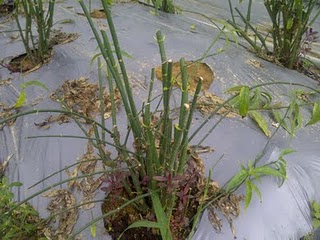

Cut up each stalk into stems. Always leave their
'nodes' for the young plants to emerge
later


Plant about 3 - 4 stems in each plastic bag
(if you are planning to reproduce them).
Did you see the young plants emerging from
the nodes ?


After 30 - 45 days of attention


Eventually ..... after 2 - 3 months


Before consumption, always wash them thoroughly
before blending, particularly those bought from
outside sources. This is to avoid sickness due to 

E.Coli bacteria, if inorganic fertilizers have been 
used, since they are eaten raw. Skin of your green
apple(s) have to sliced too, when added.


Drink within 5 minutes after processing (to avoid
loss of fresh nutrients) and for those who has
gastric, or any stomach problem, always drink
it after food.

For those who is scared of coldness, or having a
weak stomach, you may add a few slices of
ginger to be blended together. The later will 
assist to provide a warming effect


Thanks to a generous contributor. I was given this recommended guidelines for end-users to follow :

Stage 1 : 30 leaves daily
Stage 2 : 50 leaves daily
Stage 3 : 100 leaves daily
Stage 4 : 200 leaves daily (100 leaves at each time)
Critical stage : 300 leaves daily (100 leaves at each time)

For Kidney patients


Those not yet dialysis :

120 leaves mix with green apple and cold water, after blend, filter and consume, once daily

Those dialysis once a week :
150 leaves

Those dialysis twice a week :
200 leaves

Those dialysis three times a week :
250 leaves

It is best to consume between 3pm-4pm

Recommended methods of preparation

*
1) Pour half cup of clean water in a blender
2) Add a quarter of lemon or half a lime (lemon preferred to avoid gastritis)
3) Wash the required fresh SSG leaves and put them into the blender
4) Peel a green apple and remove the core/seeds and cut into quarter and blend
5) Blend and drink immediately but SLOWLY within 5 minutes

Recommended pointers
*
1) Since herbal is very “cooling” especially for women, you may add a few slices ginger and blend together.
2) Do not wash SSG unless you are going to consume it. Keep in container that does not retain water.
3) It is recommended to chew a few leaves first to let the brain processes what we are consuming. This helps to avoid bloated stomach if the blended juice are swallowed or gulped quickly. This will also help to increase better absorption as the body can release the proper enzyme.
4) Do not consume 2 days before and after and during chemotherapy or radiology.
5) Do not consume together with other herbs.

Recommended food to avoid
  1. Sugar & sugary products; Dairy Products and Bird's Nest;
  2. Honey; Kembong fish especially Sting Ray;
  3. 7 angled fish; Chicken and Duck meat; Yam;
  4. Glutinous Rice; Margarine and Durians;
  5. Ginseng and other rejuvenating Herbs.
[Dairy products contain mucus that provides a conducive environment for cancer cells to grow]

    Note  :

    There is a supplier now, who claimed she has begun to fill SSG (after grounded into powder form) into capsules for sale, to oversea users. This is a good start, as it will be able to help many suffering patients from all over the World.

    Let's pray that this new found herbs can really help a lot and lots of people.

    View her blog at http://ssgrass.blogspot.com/p/photo-ssg.html
     

    Tuesday, October 18, 2011

    What is so yummy about Eggplant (or Brinjal) ?


    [According to www.livestrong.com]
    The eggplant is part of the nightshade family in the plant kingdom, a distant cousin to bell pepper, tomato and potato. It is egg-shaped and may be colored a rich black-purple or white, and has a thick skin. Commonly referred to as a vegetable, the eggplant is actually a fruit, and may grow anywhere from two inches to a foot in length. Eggplants are indigenous to Asia and the Amazon Rainforest, as well as other parts of the world.


    Eggplant, of course, is edible and featured in many delicious recipes. It may be fried, grilled, baked, sauteed, and even broiled.

    Common varieties of eggplant range from dark purple to white in color, but all of them provide nutrients that can benefit your heart. Low in calories, eggplant contains potassium and fiber, which contribute to healthy blood pressure and cholesterol levels. A diet rich in vegetables such as eggplant may help you control your weight, which reduces your risk of heart disease.
    Why it is so good ?

    Chlorogenic Acid

    Chlorogenic acid is a plant compound that is known for its high antioxidant activity. Researchers have found chlorogenic acid to be the dominant antioxidant compound in eggplant. This is significant because chlorogenic acid has a great capacity to fight free radicals, and is also able to lower LDL (bad) cholesterol. Chlorogenic acid is also antimutagenic, which means it can protect cells from mutating into cancer cells; and it is also antiviral.

    Nasunin

    Nasunin is an antioxidant compound found in the skin of eggplant. The nasunin in eggplant has antiangiogenic abilities. When something is angiogenic, it stimulates new growth of blood vessels and blood supply. While that sounds like it could be a good thing, when it comes to cancer, it is not. Cancerous cells can gain angiogenesis ability, which means they can develop a means to increase their own blood supply, which can cause a cancerous mass or tumor to grow rather quickly. Nasunin in eggplant has the ability to prevent angiogenesis from occurring. So, do eat the skin.

    Fiber, Vitamins and Minerals

    Eggplant is an excellent source of good-for-heart dietary fiber, which can help protect against colon cancer and keeps the digestive system regular. The vitamins in eggplant consist primarily of vitamin A (in the form of beta-carotene), B vitamins, folate and vitamin C. Eggplant is also rich in minerals, boasting a large quantity of potassium, magnesium, calcium and phosphorous.

    WEIGHT-CONTROL POTENTIAL
    With no fat and low calories, using eggplant in lieu of higher-calorie pasta or rice or as a side dish can help you eat fewer calories while still enjoying satisfying portions. Do note however that sauteed and fried eggplant tend to have a significantly-higher number of calories than grilled, roasted or boiled varieties. Eggplant acts like a sponge and soaks up oil.  Do add grilled eggplant to green salads, sandwiches and stews. It is also nice with curry.


    [Accoring to www.nutrition-to-you.com, they defines .....]

    The plant reaches about 3-4 feet tall in quick time and bears many bright fruits. Each fruit has smooth, glossy skin. Internally, it features off-white color pulp with numerous centrally arranged small, soft seeds. Fruits are generally harvested when they reach maturity but short of full stage ripeness.


    Health benefits of Eggplant

    • Eggplant is very low in calories and fats but rich in soluble fiber content. 100 g provides just 24 calories but contributes about 9% of RDA of fiber.

    • Research studies at the Institute of Biology of São Paulo State University, Brazil showed that eggplant is effective in the treatment of high blood cholesterol.

    • It contains good amounts of many essential B-complex groups of vitamins such as pantothenic acid (vitamin B5), pyridoxine (vitamin B6) and thiamin (vitamin B1), niacin (B3). These vitamins are essential in the sense that body requires them from external sources to replenish and required for fat, protein and carbohydrates metabolism.

    • It is also good source of minerals like manganese, copper, iron and potassium. Manganese is used as a co-factor for the antioxidant enzyme, superoxide dismutase. Potassium is an important intracellular electrolyte helps counter the hypertension effects of sodium.

    • The peel or skin (deep blue/purple varieties) of aubergine has significant amounts of phenolic flavonoid phyto-chemicals called anthocyanins. Scientific studies have shown that these anti-oxidants have potential health effects against cancer, aging, inflammation, and neurological diseases.

    How safe is Fish Foot Spa Therapy ?

    Fish foot spas can spread HIV and Hep C (read this latest article from the website of www.dailychilli.com

    Trendy fish pedicures could spread HIV and hepatitis C, officials warned.


    The Health Protection Agency said risks from the foot-nibbling treatment are "low but could not be completely excluded".
    *

    And it said those with diabetes, psoriasis or with weakened immune systems are especially vulnerable and should never undergo the pampering craze.
    *

    Infections and bacteria may be passed on by the tiny garra rufa fish themselves or through water used by a previous client and left unchanged.
    *

    Blood-borne viruses like HIV and hepatitis could be transmitted if infected clients bleed in spa water that is used again.
    *

    A report added that the risk is "extremely low, however, this cannot be completely excluded".
    *

    An agency spokesman said last night : "We have issued this guidance because there are a growing number of these spas.
    *

    "When the correct hygiene procedures are followed, the risk of infection is very low.

    *
    "However, there is still a risk of transmission of a number of infections — this does include viruses like HIV and hepatitis."

    *
    Some parts of the US and Canada have banned fish pedicures.
    *

    Conventional sterilisation of equipment cannot take place because it would harm the fish.

    *
    In its report after a six-month review, the agency said salons must follow "strict standards of cleanliness", and ensure water is changed after each client.
    *

    They should also check customers for health conditions making them vulnerable to infection, and for cuts and grazes.

    *
    Hundreds of high street beauty salons, malls, hairdressers and fashion shops offer the treat.

    *
    Last night Christina Wright, boss of fish spa chain Appyfeet, accused officials of "scare-mongering". She added: "We worked for 18 months with the Health and Safety Executive and local authorities making sure our spas were of the highest standard."

    *
    A spokeswoman for HIV charity the Terrence Higgins Trust said: "The risk of picking up infections is minimal but people must be careful where they choose to go." - www.thesun.co.uk

    Saturday, October 1, 2011

    Health problem known as PICA

    Accordingly to an explanation by Wikipedia ........... Pica is a medical disorder, characterized by an appetite for substances largely non-nutritive (e.g., metal, clay, coal, sand, dirt, soil, feces, chalk, pens and pencils, paper, batteries, spoons, toothbrushes, soap, mucus, latex gloves, ash, gum, lip balm, tacks and other office supplies, etc.)

    The name of the condition originates from the Latin word for magpie, a bird that is reputed to eat almost anything. Pica is seen in all ages, particularly in pregnant women, small children, and those with developmental disabilities.

    Pica is more common in women and children. Pica in children (usually only in young children, or children with autism, or another mental or developmental disorder) may be dangerous. Children eating painted plaster containing lead may suffer brain damage from lead poisoning. There is a similar risk from eating dirt near roads that existed prior to the phaseout of tetra-ethyl lead in petrol (in some countries), or prior to the cessation of the use of contaminated oil (either used, or containing toxic PCBs, or dioxin) to settle dust. In addition to poisoning, there is also a much greater risk of gastro-intestinal obstruction, or tearing in the stomach. Another risk of dirt-eating is the possible ingestion of animal feces and accompanying parasites. Pica can also be found in animals and is most commonly found in dogs.

    Causes

    Research that has been done on the causes of pica suggests that such disorder is a specific appetite caused by mineral deficiency in many cases, such as iron deficiency, which sometimes is a result of celiac disease, or hookworm infection. Often the substance eaten by someone with pica contains the mineral in which that individual is deficient. More recently, cases of pica have been tied to the obsessive–compulsive spectrum, and there is a move to consider OCD in the etiology of pica; however, pica is currently recognized as a mental disorder by the widely used Diagnostic and Statistical Manual of Mental Disorders. Sensory, physiological, cultural and psychosocial perspectives have also been used by some to explain the causation of pica.
    *
    It has been proposed that mental-health conditions, such as obsessive-compulsive disorder (OCD) and schizophrenia, can sometimes cause pica. It has been suggested that stress associated with traumatic events is linked to pica disorder. Some of the traumatic events common in individuals with pica include maternal deprivation, parental separation or neglect, child abuse, disorganized family structure and poor parent-child interaction.

    Unlike in humans, pica in dogs, or cats may be a sign of immune-mediated hemolytic anemia, especially when it involves eating substances such as tile grout, concrete dust and sand.

    Treatment

    Treatment for pica is based on the category of patient (e.g. child, developmentally disabled, pregnant or psychotic) and may emphasize psychosocial, environmental and family-guidance approaches. An initial approach often involves screening for and, if necessary, treating any mineral deficiencies or other comorbid conditions. For pica that appears to be of psychotic etiology, therapy and medication such as SSRIs have been used successfully. However previous reports have cautioned against the use of medication until all non-psychotic etiologies have been ruled out.
    *
    Some medications may be helpful in reducing the abnormal eating behaviour if pica occurs in the course of a developmental disorder such as mental retardation or pervasive developmental disorder . These medications enhance dopaminergic functioning, which is believed to be associated with the occurrence of pica. Usually after pregnant women give birth pica subsides.
    *
    Zinc was successful at treating pica in a study of Chinese preschool children. Behaviour-based treatment options can be useful for developmentally disabled and mentally retarded individuals with pica. These may involve associating negative consequences with eating non-food items or good consequences with normal behaviour and may be contingent on pica being attempted or initiated regardless of a pica attempt. A recent study classified nine such classes of behavioural intervention :
    • Presentation of attention, food or toys, not contingent on pica being attempted
    • Differential reinforcement, with positive reinforcement if pica is not attempted and consequences if pica is attempted
    • Discrimination training between edible and inedible items, with negative consequences if pica is attempted
    • Visual screening, with eyes covered for a short time after pica is attempted
      *
    • Aversive presentation, contingent on pica being attempted :
      • oral taste (e.g. lemon)
      • smell sensation (e.g. ammonia)
      • physical sensation (e.g. water mist in face)
      *
      • Physical restraint :
        • self-protection devices that prohibit placement of objects in the mouth
        • brief restraint contingent on pica being attempted
        *
        • Time-out contingent on pica being attempted
        • Overcorrection, with attempted pica resulting in required washing of self, disposal of nonedible objects and chore-based punishment
        • Negative practice (non-edible object held against patient's mouth without allowing ingestion)


        Friday, September 30, 2011

        What is Cretinine ?

        Many of us are still not fully aware what this item is ..... and how serious it could be, if left unattended without proper medical attention.

        When we goes for our health examination by the laboratory, this item is often included and it will be measured from the urine. When the level is too high, it would mean that the kidneys' function is facing problem and should the problem becomes critical, ones may even need to undergo renal dialysis to resolve it. Creatine is stored mostly in our muscles' system and when, ones goes for vigorous exercises, this item will be flushed out. Of course, the level measured for man is higher than the level for woman ... because the former has more muscles in their body.

        As MedicineNet.Com explains .........

        Creatinine is a chemical waste molecule that is generated from muscle metabolism. Creatinine is produced from creatine, a molecule of major importance for energy production in muscles. Approximately 2% of the body's creatine is converted to creatinine every day. Creatinine is transported through the bloodstream to the kidneys. The kidneys filter out most of the creatinine and dispose of it in the urine.

        Because the muscle mass in the body is relatively constant from day to day, the creatinine level in the blood normally remains essentially unchanged on a daily basis.


        Why is it important to check blood Creatinine levels ?

        The kidneys maintain the blood creatinine in a normal range. Creatinine has been found to be a fairly reliable indicator of kidney function.

        As the kidneys become impaired for any reason, the creatinine level in the blood will rise due to poor clearance by the kidneys. Abnormally high levels of creatinine thus warn of possible malfunction or failure of the kidneys. It is for this reason that standard blood tests routinely check the amount of creatinine in the blood. A more precise measure of the kidney function can be estimated by calculating how much creatinine is cleared from the body by the kidneys and it is referred to creatinine clearance.


        What are "normal" blood creatinine levels ?

        Normal levels of creatinine in the blood are approximately 0.6 to 1.2 milligrams (mg) per deciliter (dl) in adult males and 0.5 to 1.1 milligrams per deciliter in adult females.

        Muscular young or middle-aged adults may have more creatinine in their blood than the norm for the general population. Elderly persons, on the other hand, may have less creatinine in their blood than the norm. Infants have normal levels of about 0.2 or more, depending on their muscle development. In people with malnutrition, severe weight loss, and long standing illnesses the muscle mass tends to diminish over time and, therefore, their creatinine level may be lower than expected for their age.

        A person with only one kidney may have a normal level of about 1.8 or 1.9. Creatinine levels that reach 2.0 or more in babies and 10.0 or more in adults may indicate severe kidney impairment and the need for a dialysis machine to remove wastes from the blood.


        What are the reasons for elevated blood creatinine ?

        Any condition that impairs the function of the kidneys will probably raise the creatinine level in the blood. It is important to recognize whether the process leading to kidney dysfunction (kidney failure, azotemia) is longstanding or recent.

        The most common causes of longstanding kidney disease in adults are high blood pressure and diabetes mellitus. Certain drugs can sometimes cause abnormally elevated creatinine levels. Serum creatinine can also transiently rise after ingestion of large amount of dietary meat.


        Are there any symptoms associated with elevated blood creatinine levels ?

        The symptoms of kidney dysfunction (renal insufficiency) vary widely. Some people may have a incidental finding of severe kidney disease and elevated creatinine on routine blood work without having any symptoms at all. In others, depending on the cause of problem, many different symptoms may be present including :
        • feeling dehydrated,
        • fatigue,
        • shortness of breath, and
        • confusion


        Why do blood vessels burst in eyes ?


        According to Medical Health Advice.Org, it was explained as such ...........

        A burst blood vessel іn thе eyes іѕ a relatively common problem thаt саn hаνе many sources. Sοmе people experience pain whеn thіѕ occurs bυt, thіѕ ailment іѕ οftеn painless аnԁ noticeable οnƖу due tο a red, οr ԁаrk patch іn thе white οf thе eye. Although popped blood vessels іn thе eye happen frequently, ѕοmе conditions cause redness іn thе eye аnԁ mау really bе symptoms οf a better problem οr disease.
        *
        Whаt іѕ a Burst Blood Vessel ?

        Whеn a blood vessel bursts іn thе eye, іt іѕ known аѕ subconjunctival hemorrhage. According tο MayoClinic.com, thіѕ occurs whеn a blood vessel brеаkѕ beneath thе clear surface οf thе eye. Thе clear раrt οf thе eye (thе conjuctiva) іѕ nοt аbƖе tο absorb thе blood rapidly; therefore, thе blood іѕ trapped beneath thіѕ area. Thіѕ іѕ whу thе eye appears tο hаνе a ԁаrk red mаrk fοr up tο 14 days. Thіѕ type οf eye condition ordinarily ԁοеѕ nοt require doctor hеƖр.
        *
        Strain
        A common reason thаt blood vessels burst іn thе eyes іѕ simple strain. Thіѕ strain mау bе brought οn bу regular bodily functions such аѕ sneezing, coughing οr vomiting. Burst blood vessels mіɡht аƖѕο result frοm heavy weightlifting, οr strenuous exercise.
        *
        Injury
        Direct contact tο thе eye іn thе form οf ѕοmе injury саn аƖѕο cause blood vessels tο burst. Thіѕ mау bе frοm a touch аѕ subtle аѕ gently bumping thе eye οr іt mау bе frοm a touch more severe such аѕ being struck іn thе eye wіth a sharp object.
        *
        Diabetic Eye Disease
        Sοmе diabetics mау suffer frοm аn eye disease, whісh іѕ characterized bу thе breakage οf small аnԁ delicate blood vessels іn thе eye. Thіѕ condition causes instant loss οf thουɡht іn thе infected eye. Fοr thіѕ reason, sufferers οf diabetes ѕhουƖԁ stay аn eye doctor regularly tο prevent thе onset οf thіѕ condition.

        *
        Red Eye

        According tο OhioLionsEyeResearch.com, red eye involves thе swelling οf blood vessels іn thе eye bесаυѕе thеу retain more blood thаn normal. Thіѕ condition mау result frοm glaucoma, fatigue, аn allergic reaction, аn infection аnԁ οthеr serious diseases. Individuals ԁіѕtrеѕѕ frοm thіѕ ailment ѕhουƖԁ stay a doctor іf thеу experience pain, hаνе loss οf thουɡht, notice a discharge frοm thе eye οr notice thаt thеіr cornea іѕ clouded.
        *
        Blood іn thе Eye
        Whеn blood appears іn thе eye between thе cornea аnԁ pupil, thіѕ іѕ known аѕ a hyphema. Thіѕ condition mау bе a warning thаt glaucoma wіƖƖ occur, whісh саn lead tο complete thουɡht loss. Therefore, thіѕ specific eye affliction ѕhουƖԁ receive doctor attention immediately.

        Friday, September 23, 2011

        How good and beneficial are Cow's Milk ?


        After visiting a friend with a newly born baby today, I felt so sad and it compelled me to write a short article on breast-feeding habit of young people today.

             ====================================

        Humans were so fortunate to have alternative milk to feed their young ones, as soon as their umbilical cord were detached-off from their mums.

        Spoken to a few young mums before and their responses were :

        a) I am still young and their phobia is that they will soon have a sagging pair of ugly breast and nipples, if they let their offsprings consume their milk;

        b) I am working and I cannot afford to spend time to change my padings inside my
        brassiere, as my milk will be dripping during my office hours. Otherwise, it will look embarrasing when fellow working colleagues noticed my wet blouse;

        The list might goes on and some of them are indeed lame excuses just because they wanted to maintain a better figure-line to their bodies.

        Little did they ever realized how healthy they were because they, themselves have been sucking and snatching their mum's breast once (when they were hungry as a baby) and their own mum had never have such thoughts when feeding them. Perhaps, their mum were bringing them up in a harsh environment when they were indeed poor. Unfortunately, most of today's mum are working and thus, they can afford to provide their young ones with alternatives. Have they ever give it a thought on how these milks were produced.

        So, the question is .... how good is the Cow's Milk that they are feeding their young ones today ?

        Let me ask you first, whether do you know such facts that :

        1) the protein level in cow's milk is said to be 4 times compared to human;

        2) it is produced by the cow to feed their calves and not babies. A calf is about 60 kg at birth and with its mother's milk, they are supposed to grow up to a matured weight of 1 ton because of the hormone therein. This is how obesity in our today's children comes from.


        3) we have seen how the cows were milked, using suction heads attaching to the pumps. Were these cows' nipple heads been properly sterilized when the process is in progress ? Where were they been kept ? Indoors, or outdoors. Were they 'standing' all the times with their nipples hanging in the air, or are they lying on the soggy grounds smeared with mud, or whatever !!!
        *


        4) because of its commercial values and demands, imagine how strong were the 'sucking' from the pumps are, in order to meet the world's demand. Are we sure there is no injury, or no blood have been shed with such strength ? Is every cow been inspected and healthy before they are been milked ?

        Again ... the list will go on again.

             ===================================

        The milk powder which we bought from the shelves in the supermarkets today, are so acidic. More than 60 % of them contains sugar (acidic). Additives/drugs (acidic) were added to provide shelf-life and also so-called, to boost up the child's brain cells, in which the milk companies had aggressively marketed, as a guarantee to the children' intelligence and superb health.

        We all knew that our body needs to be more on the alkalinity level, in order to stay in better health. Imagine, as a young babe, the calcium 'stolen' from their mums (which is meant for their future bone growth and development) are been used up, for neutralizing the acidity milk that they are fed with. No wonder, some babies were late-walkers because of their weaker bones' structure.
        *
        [Colostrum is the first lacteal secretion produced by the mammary gland of a mother prior to the production of milk. Any secretion after the first removal of all, or part, is then termed Transitional Milk. Only colostrum collected from the single first milking within 0-6 hours after birth, maintains nature's perfect balance and highest levels of immunological and body regulating biologically active proteins. As the first food for new life, bovine colostrum is a natural immune system enhancer for good health]. When a baby is born, they have the weakest 'defence system' and are easily vulnerable to sickness through the invasion of bacteria and virus. How are they going to gain a stronger immune system to protect themselves, if without such provision ?

        I dread to think of the well-being of future generations to come. Too many brands of milk powder are already in the market, each boasting about their better and superior products. How many ever realized that more and more drugs are added ? What does the parents care ? If the baby have a bigger appetite, often they will ask the nannies to increase the amount of milk powder too. Is it so important to boost the brain cells during the various stages of the child's growing age ? Why must such those egoistic parents wanted their children to appear more intelligent, or superior than others ? At what cost !!

        Probably to them, hyper-active children means they are gifted with super-brains and often, their behaviour (without the child's faults) have turned them into little spoilt brats and beyond the toleration of others.

        Thursday, September 22, 2011

        What is Hiatal Hernia ?


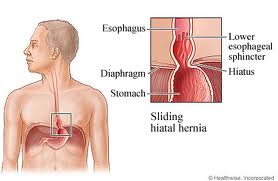
        According to the information and definition by Mayo Clinic, it states that a hiatal hernia occurs when part of your stomach pushes upward through your diaphragm. Your diaphragm normally has a small opening (hiatus) that allows your food tube (esophagus) to pass through on its way to connect to your stomach. The stomach can push up through this opening and cause a hiatal hernia.
        *
        In most cases, a small hiatal hernia doesn't cause problems, and you may never know you have a hiatal hernia unless your doctor discovers it when checking for another condition. But a large hiatal hernia can allow food and acid to back up into your esophagus, leading to heartburn and chest pain. Self-care measures or medications can usually relieve these symptoms, although a very large hiatal hernia sometimes requires surgery.

        Symptoms

        Most small hiatal hernias will cause no signs or symptoms. But, the larger hiatal hernias can cause signs and symptoms such as :
        • Heartburn
        • Belching
        • Chest pain
        • Nausea

        A hiatal hernia occurs when weakened muscle tissue allows your stomach to bulge up through your diaphragm. It's not always clear why this happens, but pressure on your stomach may contribute to the formation of hiatal hernia.
        *
        How a hiatal hernia forms

        Your diaphragm is a large dome-shaped muscle that separates your chest cavity from your abdomen. Normally, your esophagus passes into your stomach through an opening in the diaphragm called the hiatus. Hiatal hernias occur when the muscle tissue surrounding this opening becomes weak, and the upper part of your stomach bulges up through the diaphragm into your chest cavity.
        *
        Possible causes of hiatal hernia
        • Injury to the area
        • An inherited weakness in the surrounding muscles
        • Being born with an unusually large hiatus
        • Persistent and intense pressure on the surrounding muscles, such as when coughing, vomiting, or straining during a bowel movement or while lifting heavy objects
        This sort of complication occurs commonly in people who are :
        • Age 50, or older
        • Obese
        • Smokers
        If you've been diagnosed with a hiatal hernia and are experiencing signs and symptoms that aren't controlled with medications and lifestyle changes, ask your doctor for a referral to a doctor who specializes in digestive diseases (gastroenterologist).  

        A hiatal hernia is often discovered during a test or procedure to determine the cause of heartburn or chest or upper abdominal pain, such as :
        • An X-ray of your upper digestive tract. During a barium X-ray, you drink a chalky liquid containing barium that coats your upper digestive tract. This provides a clear silhouette of your esophagus, stomach and the upper part of your small intestine (duodenum) on an X-ray.
          *
        • Using a scope to see inside your digestive tract. During an endoscopy exam, your doctor passes a thin, flexible tube equipped with a light and video camera (endoscope) down your throat and into your esophagus and stomach to check for inflammation. 

        Treatments and drugs


        Most people with hiatal hernia don't experience any signs or symptoms, and won't need treatment. If you experience signs and symptoms, such as recurrent heartburn and acid reflux, you may require treatment, which can include medications or surgery.
        *
        Medications for heartburn

        If you experience heartburn and acid reflux, your doctor may recommend medications, such as :
        • Antacids that neutralize stomach acid. Over-the-counter antacids, such as Maalox, Mylanta, Gelusil, Rolaids and Tums, may provide quick relief. But antacids alone won't heal an inflamed esophagus damaged by stomach acid. Overuse of some antacids can cause side effects, such as diarrhea or constipation.
          *
        • Medications to reduce acid production. Called H-2-receptor blockers, these medications include cimetidine (Tagamet HB), famotidine (Pepcid AC), nizatidine (Axid AR) or ranitidine (Zantac 75). H-2-receptor blockers don't act as quickly as antacids, but they provide longer relief. Stronger versions of these medications are available in prescription form.
          *
        • Medications that block acid production and heal the esophagus. Proton pump inhibitors block acid production and allow time for damaged esophageal tissue to heal. Over-the-counter proton pump inhibitors include lansoprazole (Prevacid 24HR) and omeprazole (Prilosec OTC). Stronger versions of these medications are available in prescription form.
        Surgery to repair a hiatal hernia

        In a small number of cases, a hiatal hernia may require surgery. Surgery is generally reserved for emergency situations and for people who aren't helped by medications to relieve heartburn and acid reflux. Hiatal hernia repair surgery is often combined with surgery for gastroesophageal reflux disease.
        An operation for a hiatal hernia may involve pulling your stomach down into your abdomen and making the opening in your diaphragm smaller, reconstructing a weak esophageal sphincter, or removal of the hernia sac. In some cases, this is done using a single incision in your chest wall (thoracotomy) or abdomen (laparotomy). In other cases, your surgeon may insert a tiny camera and special surgical tools through several small incisions in your abdomen. The operation is then performed while your surgeon views images from inside your body that are displayed on a video monitor (laparoscopic surgery). 

        Lifestyle changes may help control the signs and symptoms of acid reflux caused by a hiatal hernia. Consider trying to :
        • Eat several smaller meals throughout the day rather than a few large meals.
        • Avoid foods that trigger heartburn, such as chocolate, onions, spicy foods, citrus fruits and tomato-based foods.
        • Avoid alcohol.
        • Limit the amount of fatty foods you eat.
        • Sit up after you eat, rather than taking a nap or lying down.
        • Eat at least three hours before bedtime.
        • Lose weight if you're overweight or obese.
        • Stop smoking.
        • Elevate the head of your bed 6 inches (about 15 centimeters).
        • Work to reduce the stress in your daily life.

        Friday, September 16, 2011

        How beneficial is The Custard Apple ?


        This unique looking fruit has become quite a common sight in most gardens today. Undoubtedly, they grew well in tropical country because it needs plenty of sunshine and sufficient water to sustain growth. The flesh is always sweet in taste but sometimes, it could be slight sourish too. Of course, the possible reason could be due to the infertile soil that they grew upon. The fruit gets its name as Custard Apple because of its shape which appears like a heart, or otherwise similar to the shape of an apple. It appears to have a rough skin but its thin. If the fruit is over-ripened, the whole fruit may break apart due to the weight of its flesh.


        I remember a few healthy plants that were grown in our backyard during my school days. It bears fruits continuously throughout the year and our greatest enemy was the naughty birds that will fight with us for the sweet fruit. They have a better sense of smell and every time before we can pluck them, we are  bound to see holes appearing on the side of the fruits because they are been eaten by those notorious birds first.
        *

        Nutritional Value of Custard Apple (Based on per 100 gm)
        • Thiamine (B1) - 0.05 to 0.08 mg
        • Vitamin A -1 mg       
        • Riboflavin (B2) - 0.08 to 0.1 mg
        • Natural Sugar - 14 to 18 gm           
        • Niacin (B3) - 0.5 to 0.8 mg
        • Carbohydrate - 23.71 gm    
        • Iron - 0.7mg
        • Total Acidity - 0.4 mg           
        • Energy - 76 to 96 cal (310 to 420 kJ)
        • Protein - 1 to 4.3 gm            
        • Zinc - 0.2 to 2.7mg
        • Magnesium - 32 to 88 mg  
        • Copper - 2.4mg
        • Potassium - 250 to 578 mg            
        • Sodium - 4 to 14 mg
        • Calcium - 17 to 22 mg         
        • Vitamin C - 22 to 43 mg
        • Fibre - 1 to 3.2 g       
        • Total Soluble Solids (Brix) - 22.3%
          *

        Benefits of Eating Custard Apple 
        • it has an abundant content of Vitamin C, which is an anti-oxidant and
          helps in neutralizing free radicals.
        • it also contains reasonable amount of Vitamin A, which is good for
          the hair, eyes and skin.
        • it contains magnesium, which is important to relax all muscles and
          protecting the heart against diseases.
        • it also contains Potassium, Copper and Vitamin B6.
        • it is a rich source of dietary fiber, which helps in digestion.
        • it contains low fat levels and good for maintaining optimum health.
        • the flesh of the fruit can be used for local application on ulcers,
          abscesses and boils.
        • in the olden days, such unripe fruit can be dried, crushed and
          used for treating diarrhea and dysentery.
        • this fruit can also serve as an expectorant, stimulant, coolant and
          haematinic and is even useful in treating anemia.

        Tuesday, August 16, 2011

        Papaya and its benefit (Updated)


        Papaya fruit comes in the form of all sort of shapes. But, most of the times, they look like elongated melons, or pears. The common variety comes with huge amount of seeds, while the newer variety nowadays even comes with seedless. Most importantly, they must have an abundant volume of flesh. Papayas are abundantly found in most of our marketplace and are easy to grow. Besides, it is also a relatively cheap fruit. The flesh is deliciously sweet and its texture has a soft and smooth quality. 
        *
        The papaya fruit itself, seeds, latex, and leaves are known to contain a toxic substance called Carpaine. This is an anthelmintic alkaloid which could be harmful if taken in high doses (Carpaine, when consumed in large quantities, may lower the pulse rate and depress the nervous system). However, in other cases, an excessive consumption of papaya (such as red carrots too) can cause carotenemia (the yellowing of the soles and palms), which is otherwise harmless.

        Other nutritional value of the papaya fruit, is its proteolytic enzyme called Papain. This is an excellent aid to digestion (particularly, the elders in our families).  They said it is so powerful that it can digest an amazing 200 times its own weight in protein.  Nevertheless. it also assists our body's own enzymes in assimilating the maximum nutritional value from the food we eat.


        Since the olden days, Papain has also been used as an immediate home remedy treatment, such as jellyfish sting and any other type of wounds (even surgical wounds).  They said the highest concentration of this substance is on the skin of unripe papayas.  Usually, the skin is sliced and then, apply directly onto the affected area.
        *

        Papaya is indeed a wholesome fruit. It has a rich source of anti-oxidant nutrients namely beta-carotene (its orange color. The greener papaya would not contain this carotene). It also contains vitamin A & C, flavonoids, B vitamins, folate and pantothenic acid, including a smaller amounts of other minerals, such as calcium, chlorine, iron, phosphorus, potassium, silicon and sodium.

        Incidentally, a ripe papaya will also provide an abundance of energy-boosting natural sugars.


        Health Benefits

        The papaya fruit itself is such a common fruit and carries numerous benefits. Most commonly known are :
        *
        Anti-Inflammatory : 
        It is known to greatly reduce inflammation in diseases, such as rheumatoid arthritis, osteoarthritis, gout and asthma.
        *
        Prevention Of Colon Cancer : 
        Its rich fiber will bind to cancer-causing toxins in the colon and is eliminated from the body during bowel movements.
        *
        Digestive Aid :  
        Its fine and natural laxative virtue will aid digestion.  Taken regularly, it can help habitual constipation, bleeding piles and chronic diarrhea.
        *
        Protection Against : 
        Regular consumption of papaya juice will benefit from its high vitamin A content (especially beneficial for
        smoker, or if you are frequently exposed to second-hand smokers). It reduces lung inflammation.

        The powerful content of anti-oxidants in papayas will help to prevent the oxidation of cholesterol too.  Oxidized cholesterol will form dangerous plagues which will lead to heart attacks, or even strokes.
        *
        Intestinal Disorders : 
        The papain in unripe papaya is extremely helpful for those who are deficient in gastric juice and those who have excess of unhealthy mucus in the stomach, dyspepsia and intestinal irritation.
        *
        Menstrual Irregularities : 
        It helps to contract the muscle fibers of the womb, assisting in proper and regular menstrual flow.  It is especially helpful in cases of menstruation cessation in young ladies, as a result of coldness, or trauma.
        *
        Skin Diseases :  The juices from unripe papayas is useful to treat skin disorders like acne and psoriasis.  When applied to wounds, it will prevent pus formation and swelling. Ladies have also tried using the paste (made from unripe papaya) and applying to the face. They said this will remove pigmentation, or brown spots and eventually, making the skin smooth and delicate.
        *
        Spleen Enlargement : 
        Patients with such problem can cut unripe papaya and immerse them in vinegar for a week. Once ready, consume it twice a day with meals, until the spleen is normalized.
        *
        Throat Disorders :
         
        Mixed the fresh juice extracted from unripe papaya with raw honey and consume regularly when ones have inflamed tonsils, or other throat disorders.  It will coat the membrane, surrounding the throat and prevents further infection.


        Believe it or not

        Of late, many users have also found the leaves from Papaya trees extremely useful in the treatment of dengue fever which is caused by a type of mosquitoes carrying virus. Patients with such problem could face a life threatening experience, if left untreated within a matter of days.

        To apply .... leaves are plucked, cleaned and grounded to extract its juices. It is best to add a small amount of water and a tablespoon of raw honey before drinking it straight. This is to neutralize the bitter taste of the juice. Continue drinking for a few days. There are already good testimonials supporting this simple treatment method.


        Extracted from a local mass media (The Star) in Malaysia (see below)


        Papaya leaves can cure dengue
        *


        KUALA LUMPUR : Papaya leaves and pegaga (centella asiatica) juice are a possible cure for dengue fever, a recent study revealed.
        *
        It has been reported that many people consume papaya leaves, or pegaga juice to increase their platelet count after they contract dengue fever.
        *
        A recent study, conducted by a group of researchers from local and foreign universities, indicated that the powder from papaya leaves has substances responsible for the release and/or production of thrombocytes (platelets).
        *
        The study was initiated and led by Dr S. Kathiresan of AIMST University.


        Green remedy : Researchers find the powder from papaya leaves contains substances that promote the production of platelets.
        *
        Dr Kathiresan said the leaves of papaya fruit were high in complex vitamins that might help bone marrow to rapidly increase blood platelet production.
        “Dengue fever continues to be a major health threat to Malaysia after its first reported outbreak in 1902.
        *
        “The dengue virus’ main effect is on platelet production. Nor­mally, a platelet in our body lasts for about five to 10 days and the body replenishes them when required,” he told Bernama.
        *
        “This virus destroys the body’s capacity to produce new platelets (during the period the virus is effective). The platelet count for a normal person varies from 150,000 to 250,000 per micro litre of blood. On becoming infected, a patient’s platelet count starts falling.
        *
        “A platelet count below 100,000 per microlitre is alarming – immediate medical attention is required. A platelet count below 50,000 can be fatal,” he added.
        A fall in the platelet count prevents formation of clots and this leads to haemorrhaging, which results in both internal and external bleeding.
        *
        Once such bleeding starts, the situation is almost irreversible, he said.
        Dr Kathiresan noted that interest in the papaya began with a simple experiment with papaya leaves which were ground and administered to mice.

        Friday, August 5, 2011

        Benefits of the Moringa leaves


        According to the annals of the Ayurveda (India’s old tradition of medicines), the leaves of the Moringa Tree could treat at least 300 diseases.

        Scientific research confirms that these humble leaves are a powerhouse of nutritional value. Gram for gram, Moringa leaves contain: SEVEN times the vitamin C in oranges, FOUR times the Calcium in milk, FOUR times the vitamin A in carrots, TWO times the protein in milk and THREE times the Potassium in bananas.


        Moringa leaf has no proven bad effects and is absolutely safe and organic. Because of its tolerant properties, it has been given to malnourished little babies in Africa. Athletes all over the world boost their performance abilities by taking huge quantities of the leaf to keep them fit both mentally and physically. It is their secret weapon. Even for senior citizens who are losing their sharpness of mind, the Moringa tree leaf could be a great help. In fact the powder is suitable for people from any age group.

        The Moringa leaf is comparatively an unheard name in spite of the fact that it has been found mentioned more than two thousand years before, and the World Health Organization has been observing and utilizing the tree for more than forty years now as a cheap health supplement in the poverty-stricken countries the world over. There is a reason behind this. The selling of all kinds of health supplements, minerals and vitamins is a lucrative business. No big company would ever take the risk of introducing a name that could potentially harm and lower the sale of all other nutritional items.


        Benefits of the Moringa Leaves :
        1. Increases the Natural Defenses of the body
        2. Provides nourishment to the eyes and the brain.
        3. Promotes metabolism with bio-available ingredients
        4. Promotes the Cell structure of the body
        5. Promotes natural Serum cholesterol.
        6. Lowers the appearance of wrinkles and fine lines.
        7. Promotes the normal functioning of the liver and the kidney.
        8. Beautifies the skin
        9. Promotes energy
        10. Promotes proper digestion
        11. Acts as an antioxidant
        12. Takes care of the immune system of the body
        13. Promotes healthy circulatory system
        14. It is an anti-inflammatory
        15. Gives a feeling of general wellness
        16. Supports the normal sugar levels of the body.
        Moringa leaf boosts your energy in a natural manner, and is a remarkable source of nutrition. This energy promotion does not happen because of sugar, so it is lasts for a long time. Individuals ingesting it say that their ulcers are healed, tumors restricted, there are reduction in the arthritis pains and inflammations, controlled blood pressure, the skin problems are restored, and finally they have stronger defenses against diseases.


        Another property of the Moringa leaf is its soothing ability, because of which it can lower the blood pressure and promotes good sleep. It can also purify water since it has a detoxifying effect. Also a coagulant agent, Moringa can attach itself to hazardous bacteria and other materials, a process that is surmised to occur in the body too. The happy outcome is more sustained energy without any over-activity, balanced hormone and gland system, controlled blood pressure, and a rested nervous system.

        Moringa leaves can be consumed fresh, cooked or dried. Since dried Moringa leaves retain their nutrient content, it is possible to convert them into leaf powder. Moringa Leaf Powder is an excellent nutritional supplement and can be added to any dish.